


* Missing Signals(WIP)*
Audio Visual / Expanded Animation, 2026
「迷失訊號」
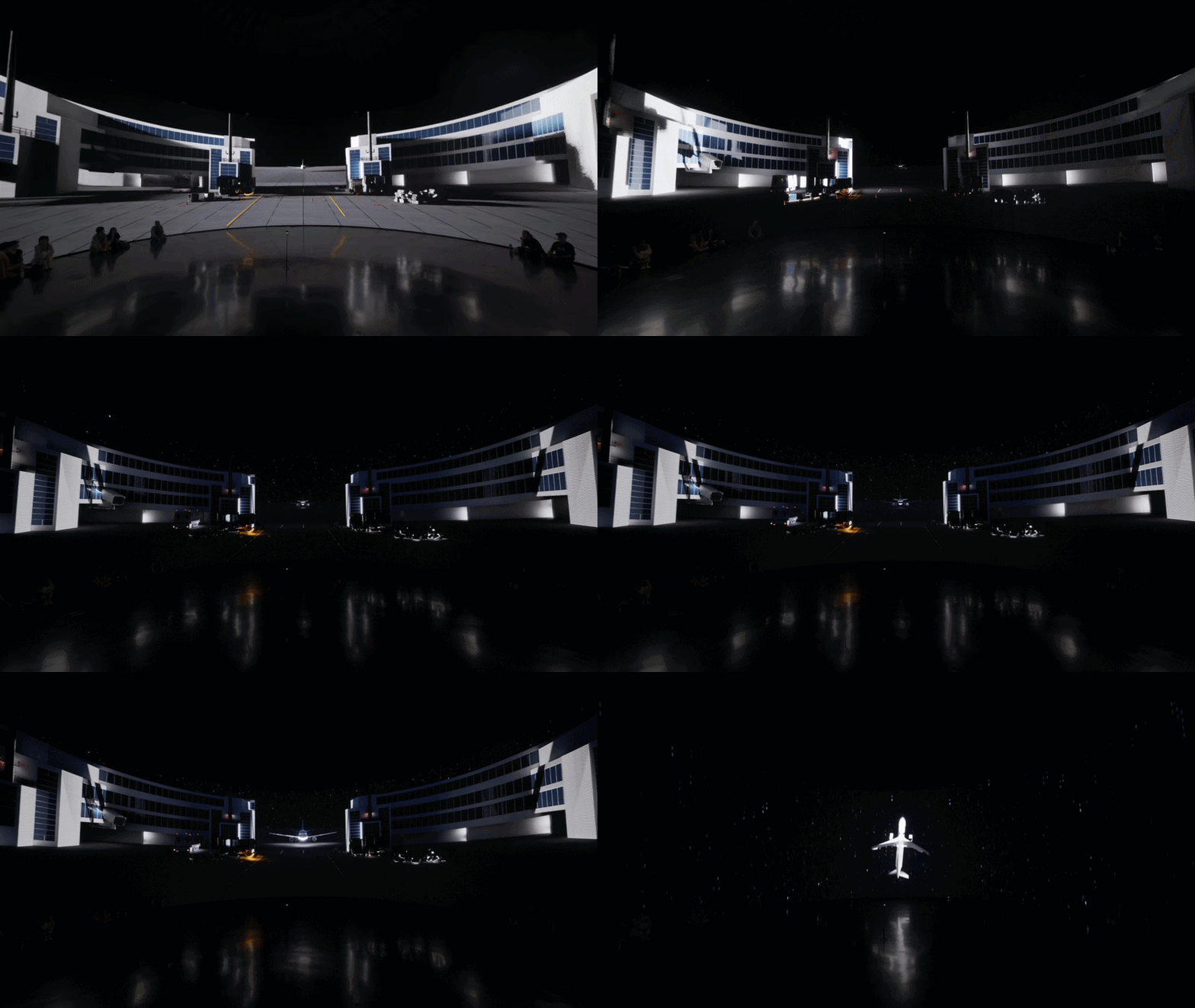
Missing Signals is a game-engine-based expanded animation presented within a matrix-like ring-screen environment. The installation is composed of two curved screens: a primary screen carrying a high-speed aerial sequence, and a secondary screen functioning as a system interface of flight schedules, radar scans, route records, and status updates.
On the main screen, an aircraft departs from the terminal and is followed by a rapidly accelerating camera. As the flight moves forward, it gradually deviates from its assigned route and enters an airspace contaminated by network noise, unstable coordinates, and residual traces of data. The aircraft does not simply crash; it is pulled apart through its own passage, as if the act of navigation itself were becoming increasingly violent, uncertain, and unreadable.
The sound of the work is not treated as background, but as part of the signal system. Engine pressure, radar-like pulses, fragmented announcements, digital interference, and low-frequency vibrations form an unstable acoustic atmosphere. The sound moves between orientation and alarm, between the mechanical and the spectral. It gives the screen space a physical tension: the viewer does not only watch the aircraft deviate, but senses the loss of signal through rhythm, pressure, delay, and distortion.
Continuing Murphy Nile’s interest in mediated landscapes, unstable interfaces, and the fragile conditions of perception, Missing Signals approaches flight as a signal process. A route, a coordinate, a passenger record, a radar image, and an interface together decide what can be understood as arrival, and what is registered as loss. The plane is already drifting away, but the system still updates.
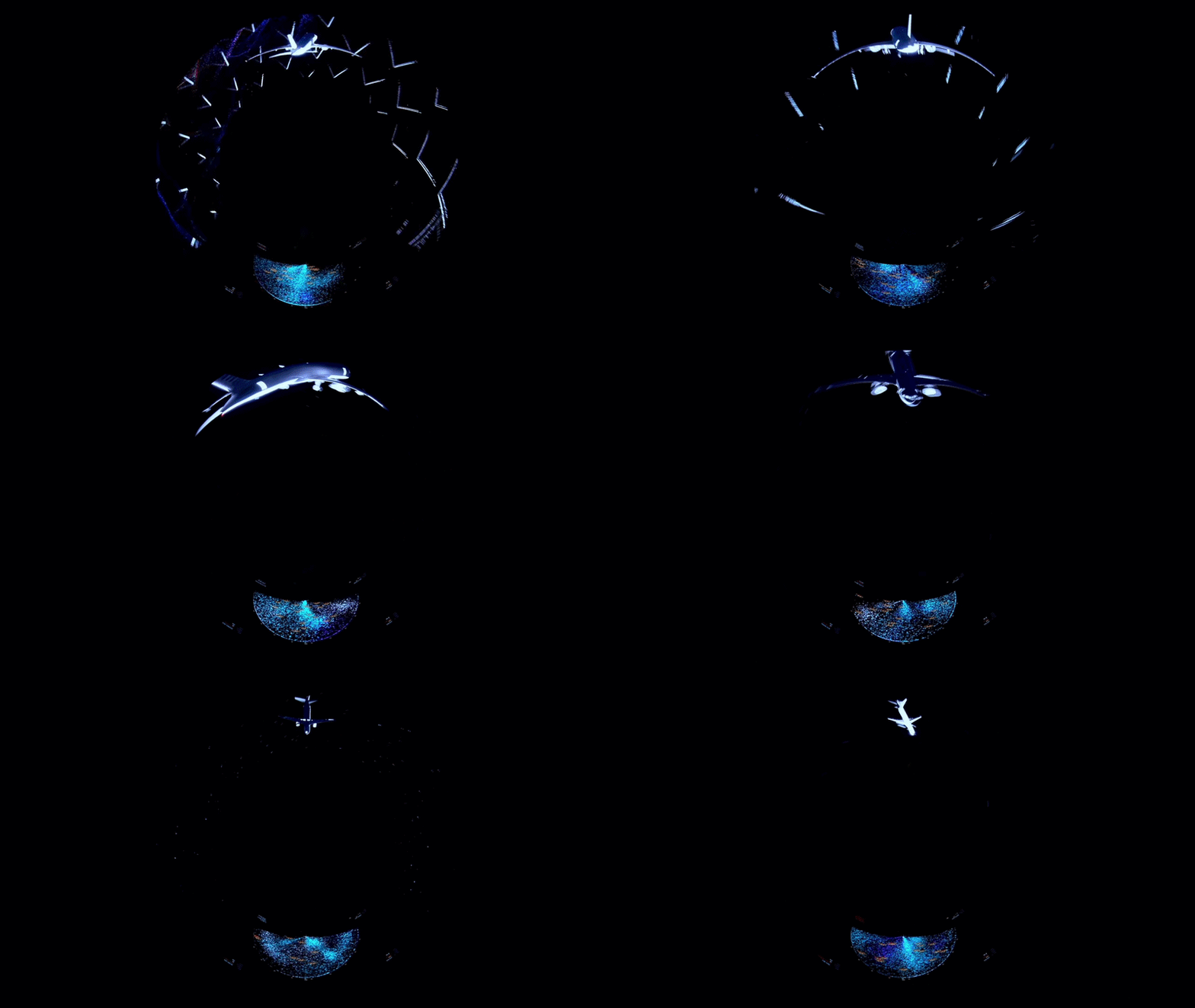

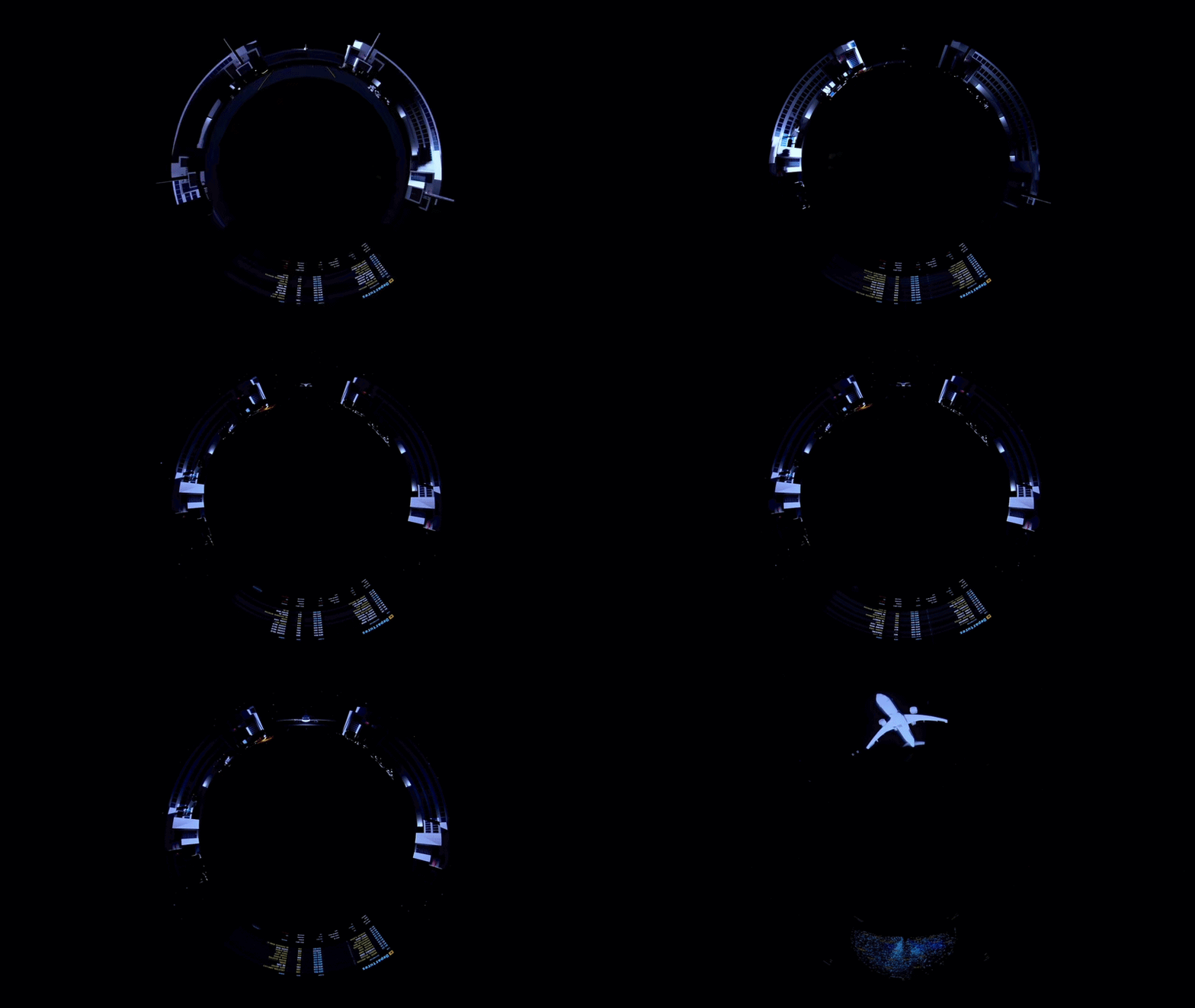


The secondary screen gives Missing Signals a quieter procedural tension. It shifts attention from the aircraft image to the systems that continue to read the flight. Schedules refresh, radar traces circulate, route
The secondary screen shifts the work from aerial movement to the systems that keep flight readable. Schedules refresh across the curved board; radar traces circulate; route records update; passenger status is checked against unstable information.
The interface keeps the familiar structure of airport display, yet its categories drift from destination and timing into uncertainty, exception, and review.
On the main screen, flight is experienced as acceleration and spatial pressure. On the secondary screen, the same event is slowed into public information, radar reading, and technical registration. Motion becomes rows, scans, pulses, and remarks. The aircraft remains partially legible inside the interface, though the record no longer behaves like a normal timetable.
In the ring-screen environment, this smaller screen holds a quiet procedural tension. It places the viewer close to a monitoring surface, where the event is continuously refreshed, measured, and reclassified.
”Loading...Project 4“ in UFO Terminal Shanghai
© UFO Terminal